How to Organize Backup Toiletries

How to store and rotate spare toiletries so restocking between stays is quick: group by type, label, use the oldest first, and set a reorder level.
Some links on this page are Amazon affiliate links. If you buy through one, we may earn a commission at no extra cost to you.
On this page
The problem
Spare toiletries tend to end up in one crowded cupboard. When the next guest is due in a few hours, digging through half-used bottles and loose soap slows the whole turnover down.
This guide gives each type of spare its own labeled spot and a level at which you reorder it.
Who this is for
This is for US hosts with one to five properties who keep spare supplies at each place or restock from one central store. It works whether you restock yourself or a cleaner does, as long as everyone follows the same layout.
Steps
- Pick one spot for backups at each property, such as a closet shelf or a cabinet guests don't use. Keep it close to the bathroom so restocking is a short trip.
- Group spares by type, one type per bin: shampoo and conditioner, body wash and soap, dental items, and paper goods. Clear bins let you see gaps without opening each one.
- Label each bin with the item and the count you want to keep. A cleaner can then restock to the same level without asking you.
- Use first in, first out. Put new stock at the back or bottom and take from the front, so older items are used before newer ones.
- Set a reorder level for each item, such as what you use across two or three stays. When a bin drops to that level, add the item to your shopping list.
- Keep your own supplies apart from guest stock. Lock them away, or store them in a marked bin or closet that cleaners know not to restock from.
- Check the bins at each turnover and note what you used. After a few stays, raise or lower your levels to match.
Product recommendations

Vtopmart Clear Stackable Storage Bins with Lids, 6-Pack
Why it's here Clear bins with lids for one toiletry type each, so you can see what's running low from the shelf.
Keep in mind The listing calls them Large; check the actual dimensions against your shelf height and depth before you buy.
Check the current price on Amazon (affiliate link)Shop on Amazon
Homepeaz Lidded Storage Baskets, Set of 3
Why it's here Lidded baskets in three sizes for a closet shelf, one per toiletry group, that you can label by type.
Keep in mind Measure your shelves; these are plastic-wicker baskets, not a locked cabinet for your own supplies.
Check the current price on Amazon (affiliate link)Shop on Amazon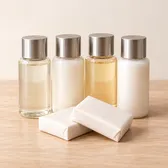
Woodbury & Co Hotel Toiletries Bulk Set, 150 Pieces
Why it's here Guest-size shampoo, conditioner, body wash, lotion and bar soap in one bulk set, easy to sort into bins by type.
Keep in mind It comes in one scent, Brown Sugar & Fig. Read the ingredient list, and check you have room to store 150 pieces.
Check the current price on Amazon (affiliate link)Shop on Amazon
Scott Professional Standard Roll Toilet Paper, 80 Rolls
Why it's here A bulk case for the paper-goods spot. Count the rolls against your reorder level at each turnover.
Keep in mind An 80-roll case takes up space; store it somewhere dry and check the roll fits your holders.
Check the current price on Amazon (affiliate link)Shop on Amazon
Alternatives and considerations
- Check each product's label for storage directions and any use-by date or period-after-opening mark.
- Your reorder level depends on bookings, guest numbers and how far you are from a store. Start with a best guess and adjust it.
- Measure shelves and cabinets before you buy bins, and leave enough room to read the labels.
- If you keep a locked closet or cabinet at the property, check your booking platform's rules on closed-off areas.